RESEARCH PLATFORM 2

R.P 2.2 An Organoid Platform and Cell-Based Platform for Ocular Therapeutic Development

An Organoid Platform and Cell-Based Platform for Ocular Therapeutic Development

Aims

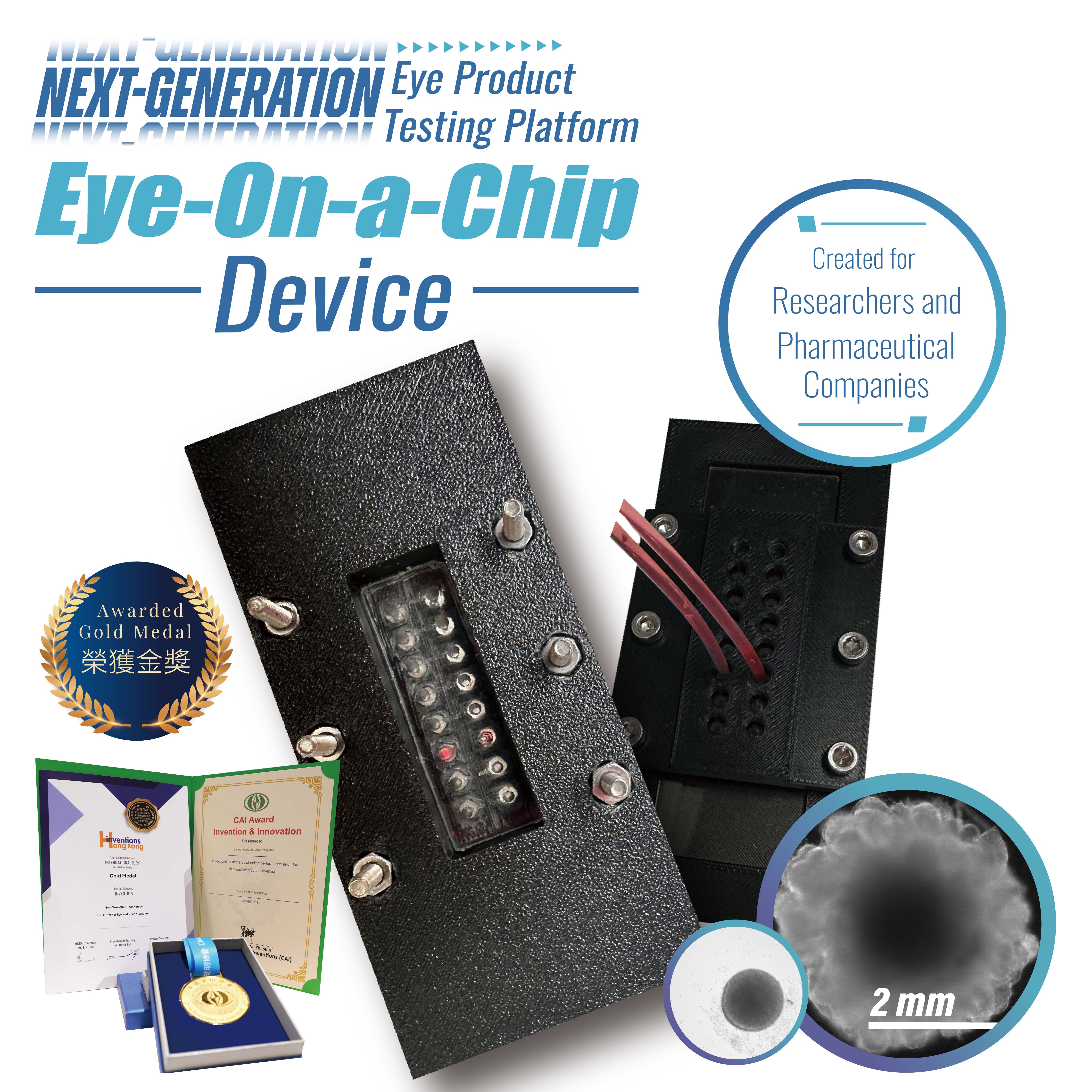
To develop ocular organoids and cells-on-a-chip models that can be marketed to pharmaceutical companies to enable rapid and low-cost testing of new therapeutics.


Background

The FDA’s decision in 2023 to eliminate animal testing requirements for clinical trials has accelerated the adoption of advanced in-vitro models, with organoids emerging as ethical and cost-effective alternatives. However, conventional in-vitro cell culture methods often struggle to replicate the complex structure, physiological functions, and biochemical environment of the human eye, highlighting the need for more sophisticated approaches. The Organoid Platform and Cell-Based Platform represents a breakthrough in vision science, leveraging microfluidics and tissue engineering to provide a more accurate simulation of ocular conditions, enabling precise investigations into ophthalmic pathogenesis and supports early-stage drug development, driving a transformative shift in research methodologies.


Work to be Done

Up to three organoids will be developed: retina, cornea and lens. Retina: Enhance iPSC differentiation into retinal ganglion cells using biomaterials mimicking the extracellular matrix. Conduct multiomics analysis to assess retinal organoid formation and test genetic variants and therapies for high myopia. Cornea: Develop corneal and lacrimal gland organoids, optimizing growth methods to reduce production time. Lens: Create transparent lens organoids for anti-cataract drug screening and presbyopia prevention. These organoids will enter the market to enable rapid testing of drug candidates for prevalent ocular conditions including myopia (retina), dry eye disease (cornea) and cataracts/presbyopia (lens). Cells-on-a-Chip: Develop a model to simulate dry eye conditions using human corneal epithelial cells and immune cells to test drug efficacy, retention, and protection. This system will enable rapid screening of novel compounds.


Benefits

This project revolutionizes organoid development with microfluidic technology, enabling scalable, high-throughput, and cost-effective production of retina, cornea, and lens models. By reducing differentiation time and ensuring uniform organoid sizes, it enhances consistency and reproducibility. The system supports simultaneous organoid generation, minimizes reagent consumption, and integrates vascular structures and immune cells via co-culture, making models more physiologically relevant for studying complex biological processes and advancing drug screening


Impact

The development of organoids will significantly enhance ocular technology research, providing valuable models for testing new devices and innovations. This process will also deepen scientists' understanding of ocular biology, leading to advancements in drug delivery materials and techniques. Successfully establishing organoid technology will position the centre as a consultancy service, attracting industry collaborations, as evidenced by strong commercial interest from pharmaceutical companies and hospitals.


Learn More About Other Research Projects